–
Hexapod
Personal project · Mechanical design and robot control
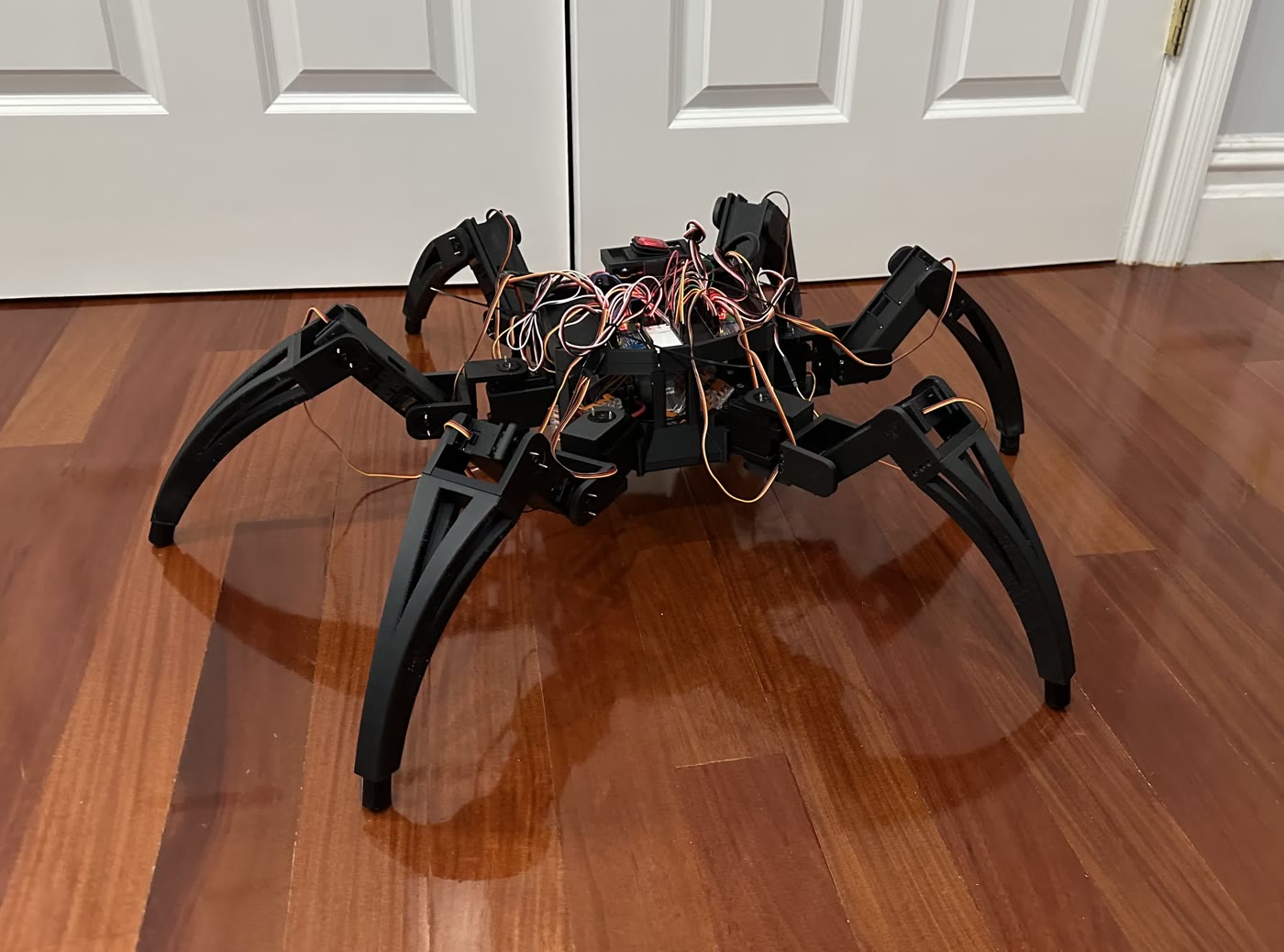
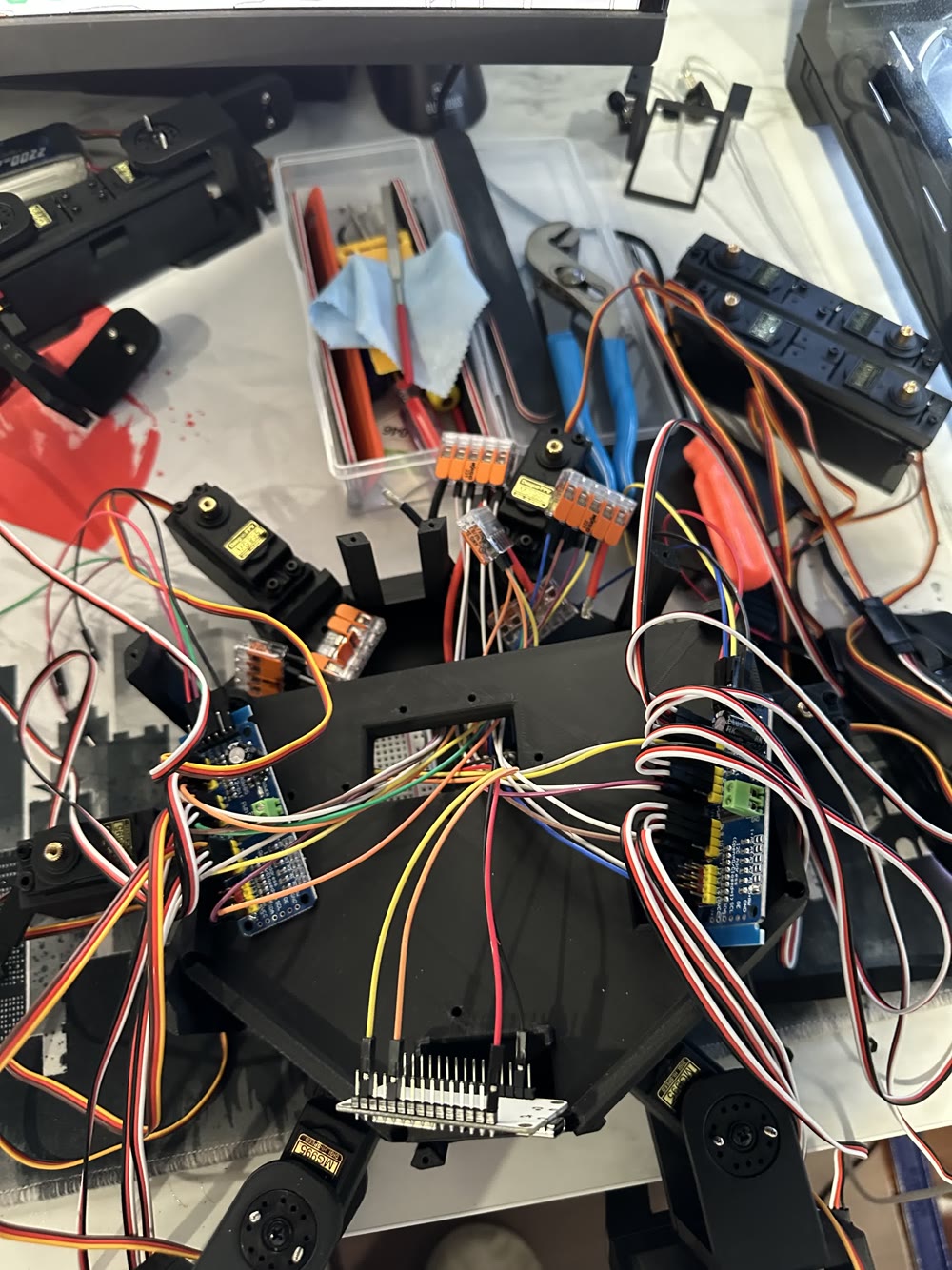
A six-legged robot with an ESP32, 18 servos, and an ABS structure modeled in Inventor and 3D printed. A browser interface controls the robot over a local Wi-Fi network.
Project overview
The project combines the mechanical design of a six-legged platform with the software needed to coordinate its motion. The controller supports walking and turning through tripod and ripple gaits.
Mechanical design
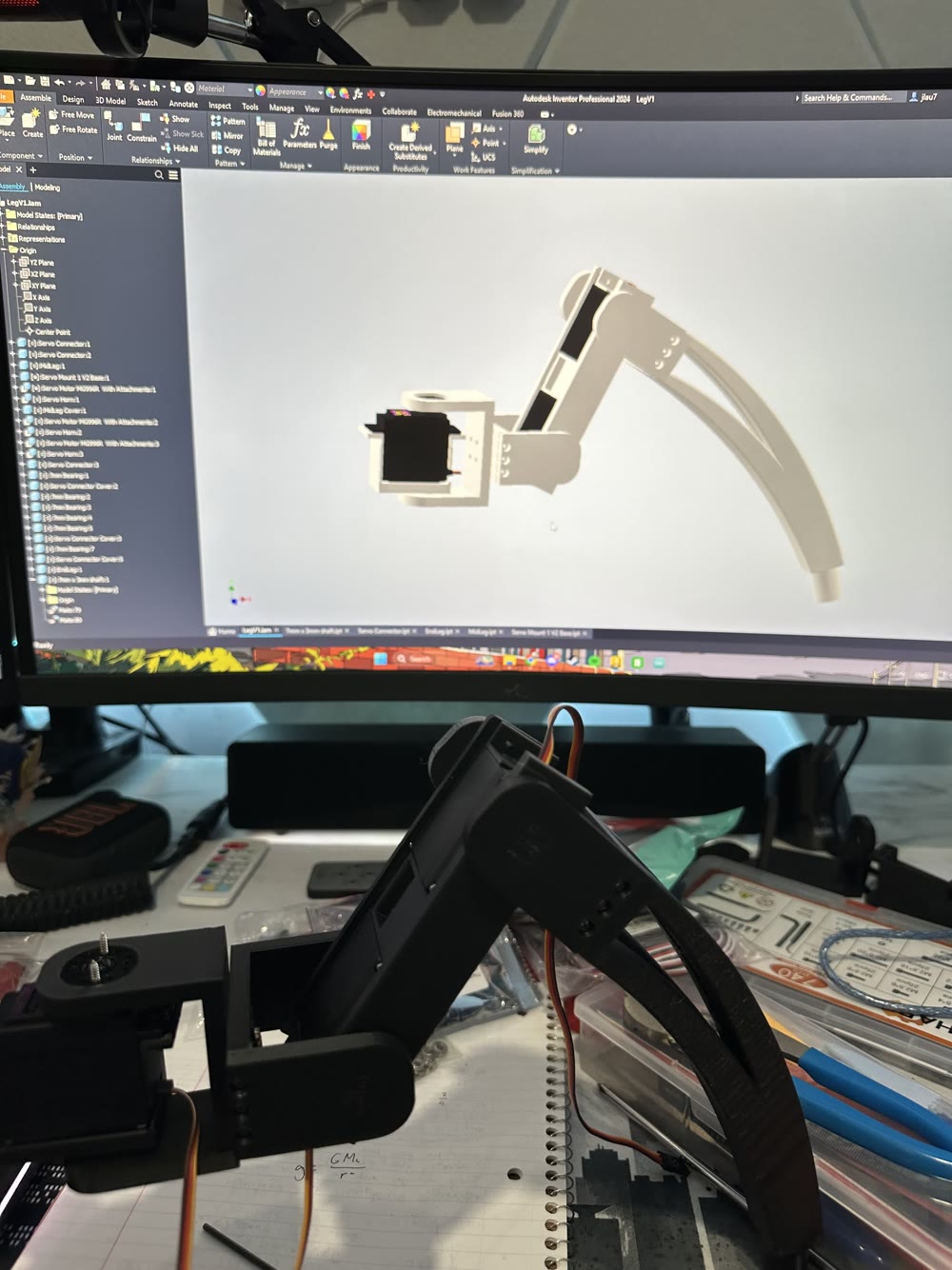
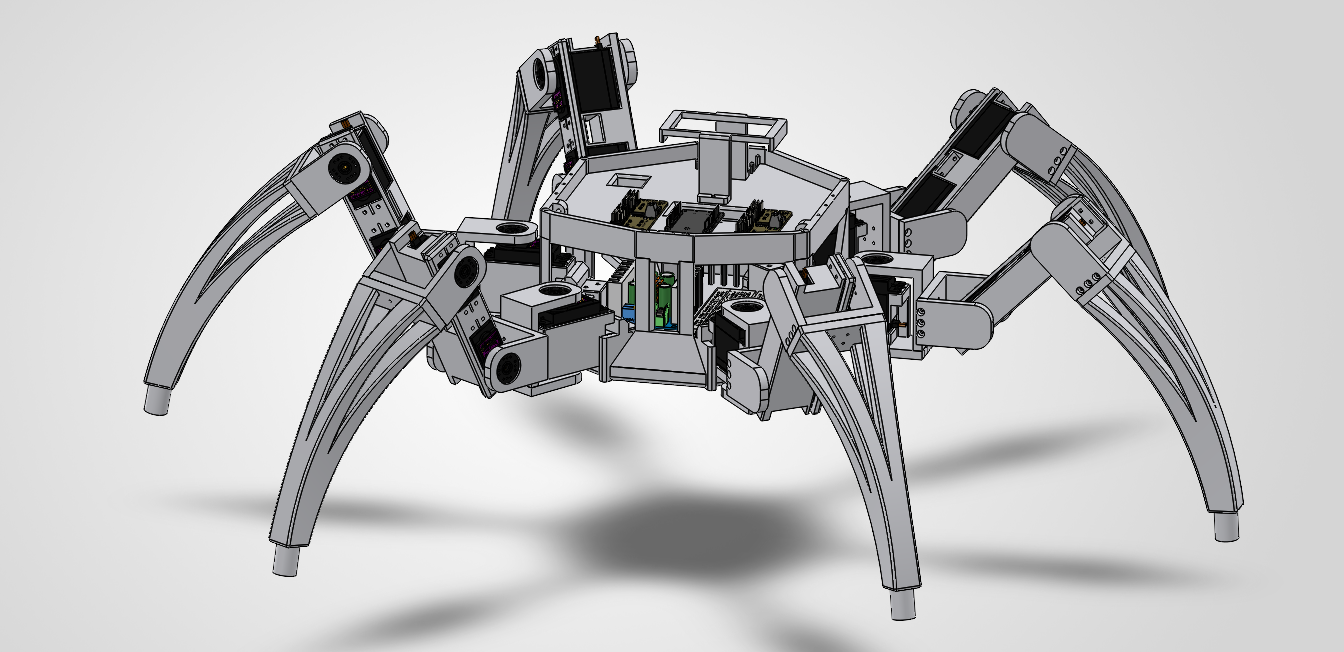
The body and leg components were modeled in Inventor and 3D printed in ABS. Each leg uses three servos.
Motion and controls
The C++ controller uses inverse kinematics and Bézier curves to reduce jitter and abrupt changes in motion. Tripod and ripple gaits coordinate the legs. The project also includes gyroscopic stabilization and terrain adaptation.
The web interface was built with JavaScript, HTML, and CSS for live control on the same Wi-Fi network.
Specifications
- Legs
- 6
- Servos
- 18
- Controller
- ESP32
- Structural material
- 3D-printed ABS
- Gaits
- Tripod and ripple
- Control interface
- Local browser interface over Wi-Fi
Testing and iteration
Inverse kinematics and Bézier curves were used to address jitter and motion discontinuities.
The clips below document two stages of development: an individual leg on a bench fixture, followed by coordinated leg motion with the assembled body supported above the floor.